 Neptune in the signs
Neptune represents imagination, ideals, sensitivity and the need to go beyond the boundaries of the self. Staying about fourteen years in a sign, it points to the collective dreams and illusions, the spiritual and artistic horizon of a whole generation. Its individual weight is read in its house and aspects.
Here you will find the meaning of each placement on its own. To see which ones apply to you, calculate your birth chart: the interpretations that concern you appear below the wheel.
Calculate your birth chart Neptune in Aries
 (a very slow sign, generational) brings idealism applied to individual action and to pioneering causes: in the personal chart it blurs the boundaries of identity, mixing the urge to act with the need for a larger ideal.
The position of Neptune in the sign of Aries joins the planet of transcendence, of intuition and of the dissolution of boundaries to the archetype of primordial fire, of initiative and of individual assertion. In this sign of action, the ideal drive of Neptune takes on a contagious dynamism, turning the spiritual search into a true pioneering mission. Whoever has this combination in the birth chart feels the visceral impulse to fight for a higher cause, becoming a promoter of social, ethical or spiritual idealism with the courage of a knight errant. The neptunian imagination does not remain a pure contemplative insight, but demands to be translated at once into act, instilling passion and boldness into the search for the absolute.
On the psychological plane, this placement fuses the delicacy of empathy with the impetuousness of desire. The individual tends to idealise action and the figure of the hero, seeking a sense of salvation through conquest or through the overcoming of personal limits. There is a deep sensitivity to the suffering of others that drives one to act with an impulsive altruism, guided more by a spiritual or poetic vision than by rational calculation. The fusion of the neptunian charge with the martian nature of Aries, however, brings complex challenges: ideal ardour can turn into ideological fanaticism or into a blind devotion towards utopian notions. The person risks scattering vital energy in unrealistic battles, or perceiving physical reality as a frustrating obstacle to personal vision.
The shadow of Neptune in Aries lies in repressed anger, or in the sense of disorientation when direct action does not produce the cosmic results hoped for, leading to crises of identity or to a sense of paralysing powerlessness. The evolutionary lesson for this position consists in learning to channel the arietine force of impact in the service of a conscious compassion. When the person manages to balance the reactive impulse with contemplative wisdom, they become a visionary leader able to tear down old paradigms with the sole force of an unshakeable faith.
 Neptune in Taurus
 (generational) dissolves the boundaries of the relationship with the concrete and the senses, bringing refined aesthetics or confusion about the real value of things: in the personal chart it softens the tie to material security.
The presence of Neptune in the sign of Taurus fuses the ethereal, dreaming and boundless energy of the mystical planet with the sensory concreteness, the search for stability and the earthly rootedness typical of the first sign of Earth. This astrological position leads to a spiritualisation of matter and of the physical body, driving the person to look for the sacred not in abstract heavens, but in the beauty of nature, in the plastic arts and in the harmony of tangible forms. The neptunian imagination turns into a deep aestheticism, into an exceptional sensitivity to biological rhythms and into an almost idyllic desire to merge with the surrounding environment through the five senses, lived as true portals of subtle perception.
In personal and material dynamics, Neptune in Taurus turns the person towards the idealisation of economic security and of property. The relationship with money and with the goods owned can become liquid and ambiguous: on one side there is a marked generosity and an almost mystical detachment from private property, on the other there can appear financial illusions, mistaken estimates of one's own resources or an excessive credulity in utopian speculation. The person looks for an earthly paradise in which to relax without the pressures of modern survival. In the artistic sphere, this combination gives an immense talent for music, for sculpture, for cooking and for all the disciplines that shape matter in order to awaken sublime emotions.
The critical points of this placement concern the risk of apathy, the tendency to take refuge in material comfort as an emotional anaesthetic and the difficulty in setting clear boundaries in the handling of shared property. The illusion can concern the conviction that physical stability is eternal, leading to immense suffering in the face of the necessary changes of life. The path of growth for whoever has Neptune in Taurus lies in learning that true abundance is a state of inner grace. By turning the relationship with matter into an act of ethical and spiritual care, the person becomes able to manifest the beautiful and the sacred in the real world.
 Neptune in Gemini
 (generational) makes the line between fact and imagination fluid in communication: in the personal chart it gives a mind alert to nuance, capable of great intuition but also of informational confusion.
Neptune in the sign of Gemini weaves the dimension of transcendence, of fluid intuition and of dreams into the realm of the intellect, of communication, of logic and of verbal exchange. This combination dissolves the rigid boundaries of rational thought, giving the individual a mind exceptionally receptive, elastic and poetic, able to catch subtle shades and invisible connections that escape simple empirical analysis. Intelligence does not proceed by mechanical syllogisms, but by symbolic associations, lightning insights and an almost empathic perception of the words and intentions of others, making the subject a fascinating and intuitive communicator.
In everyday life and in interpersonal relations, this position confers a great talent for poetry, for writing, for inspired journalism, for radio and for digital media. The individual is able to translate with grace into abstract concepts or suggestive metaphors the emotional currents of the age. The contact between Neptune and Mercury, however, generates a deep tendency towards mental scattering and intellectual illusion. The person can struggle to tell objective reality from the projections of personal imagination, falling into logical contradictions or showing an excessive credulity towards unverified theories. The danger of communicative misunderstanding, of gossip or of involuntary verbal manipulation is constant if thought is not disciplined.
The shadow of Neptune in Gemini expresses itself through superficiality disguised as deep intuition and through the inability to concentrate for long on a single intellectual aim. The mind can become like a mirror that reflects too many images at once, generating anxiety and ideological bewilderment. The evolutionary lesson for this placement consists in developing logical discernment without putting out the spark of poetic inspiration. When the intellect learns to anchor itself to the truth of things, the individual becomes a messenger of deep wisdom, able to join the rational mind to spiritual vision in order to inspire and connect human beings.
 Neptune in Cancer
 (generational) idealises family and roots, sometimes beyond what was actually lived: in the personal chart it makes the need for belonging very subtle, almost a search for a refuge more imagined than real.
The position of Neptune in the sign of Cancer places the planet of dreams, of the unconscious and of universal compassion in its ideal element of Water, tied to roots, to memory, to the family and to the sphere of primordial emotion. This configuration heightens in an extraordinary way the psychic sensitivity of the person, endowing them with an almost telepathic empathy towards the mood of others and towards the emotional currents of the environment. The individual lives immersed in an inner world very rich in images, memories and spiritual insights, seeking in the lap of the home or in the world of affection an idyllic refuge sheltered from the harshness of the outer world.
On the affective and evolutionary plane, Neptune in Cancer inclines towards a deep idealisation of the past, of one's own family origins or of the homeland. The person tends to create a myth around their own childhood or around the mother figure, seeking in family love a sense of total and unconditional fusion. This gives a great talent for assistance, for the care of others and for artistic expression rich in pathos and nostalgia. By contrast, the extreme emotional vulnerability can drive the subject to adopt passive-aggressive attitudes or to take refuge in an infantile victimhood in the face of real conflict, trying to escape the responsibilities of adult age in order to remain protected in a sheltering bubble.
The main risks of this placement gather around the confusion of personal emotional boundaries: the individual absorbs the anxieties and the pains of others as if they were their own, suffering from inexplicable swings of mood or from a latent dread of abandonment. The illusion lies in the search for a sense of absolute security in a past that no longer exists. The challenge of maturation consists in turning nostalgia into universal compassion, learning to nourish oneself and others with unconditional love, without depending emotionally on people and becoming an inner source of consolation and healing for others.
 Neptune in Leo
 (generational) dissolves the boundaries of creative expression into an almost mythic dimension: in the personal chart it brings theatrical imagination, idealised romanticism, and a self that feeds on dreams and inspiration.
Neptune in the sign of Leo joins the energy of spiritual inspiration and of transcendence to the regality, the creativity and the solar expressiveness of the sign of Fire. In this position, the neptunian archetype raises the search for personal identity to an ideal and dramatic dimension, driving the person to express their inner genius through spectacular forms of art, through performance, through the theatre or through charismatic leadership. The imagination takes on a passionate romanticism and a deep desire for spiritual glory: the individual wishes to embody an ideal of beauty, nobility and generosity able to fascinate and inspire the community.
In the affective and existential sphere, Neptune in Leo leads to a grandiose idealisation of love, of the partner and of one's own creative potential. The person falls in love with the idea of love itself, living relationships with a melodramatic intensity and a need for ecstatic fusion. There is an innate capacity to draw others towards great ideal visions, instilling hope and enthusiasm through a magnanimous charisma. This placement, however, hides a snare tied to the Ego: the line of division between true spiritual devotion and fantastic megalomania can become extremely thin, leading the person to build an ideal image of the self completely detached from reality.
The shadows of this position show themselves when reality disappoints the expectations of greatness, generating deep narcissistic crises, disillusion or the feeling of not being recognised for one's own supreme worth. The person can fall into the trap of aesthetic glamour or use personal charm in order to manipulate the attention of others. The evolutionary lesson for whoever has Neptune in Leo lies in freeing one's own creative potential from the need for outside approval. When the fire of the Ego dissolves into disinterested love, the person becomes a pure channel of joy and beauty, able to light the world with genuine solar grace.
 Neptune in Virgo
 (generational) brings an almost sacrificial ideal of service and care: in the personal chart it blurs the line between dedication to work and loss of self in caring for others, with sensitivity to the suffering of others.
The presence of Neptune in the sign of Virgo creates a complex and fascinating tension between the neptunian impulse towards the infinite, the irrational and poetic chaos, and the virginal need for order, critical analysis, logical precision and practical service. In this position of astrological fall, the planet challenges the boundaries of the analytical mind, driving the individual to look for a dimension of absolute purity through everyday work, through the care of health and through the perfecting of detail. The imagination applies itself to concrete reality, generating a strong talent for the holistic disciplines, for natural medicine, for craftsmanship of the highest level and for minute care towards others.
In psychological and behavioural dynamics, Neptune in Virgo drives one to idealise the notion of service, of sacrifice and of social usefulness. The person feels an inner vocation to help others in a practical way, but runs the risk of falling into hyper-criticism or into a constant dissatisfaction with the imperfections of the real world. The search for an ideal order can turn into hypochondria, somatised anxiety or a neurotic rigidity used as a defence against the fear of being overwhelmed by inner emotional chaos. The illusion lies in the conviction that by controlling every single detail one can remove the uncertainty intrinsic to life.
The risks of this configuration lie in the sense of personal inadequacy and in the tendency to take on the duties of others to the point of psychophysical exhaustion, turning the wish to help into a subtle self-martyrdom. The evolutionary lesson for whoever has Neptune in Virgo consists in accepting human imperfection as part of the divine design. By learning to bring rational logic together with faith in the invisible order of the universe, the individual develops an incredible capacity for healing and for service, turning everyday duty into a continual act of spiritual devotion and concrete compassion.
 Neptune in Libra
 (generational) strongly idealises relationship, harmony and fusion with the other: in the personal chart it inclines towards romantic, at times illusory bonds, where the other is seen more as an ideal than as a real person.
Neptune in the sign of Libra places the energy of mystical idealism and of the search for harmony in the sector devoted to interpersonal relationships, to partnership, to social justice and to aesthetic beauty. This position raises the notion of union to a sublime ideal, driving the individual to look in the other not for a simple companion of life, but for a twin soul with whom to merge in a perfect romantic and spiritual symbiosis. The person possesses a marked artistic sensitivity, a refined taste and a deep aversion to conflict, to ugliness and to injustice, becoming a promoter of peace, of diplomacy and of equality in every social setting.
On the relational and emotional plane, Neptune in Libra gives an extraordinary empathy towards the partner, accompanied however by the strong risk of projection and of amorous illusion. The individual tends to idealise the person loved, seeing in them qualities reflected from their own imagination rather than their real nature. When reality inevitably shows itself with its imperfections, the disillusion can prove painful and destabilising. Besides, the visceral need to keep harmony at all costs can lead the individual to give up personal boundaries, tolerating toxic compromises, ambiguity or manipulative behaviour in order to avoid separation or solitude.
The shadows of this placement concern the inability to take clear decisions in affective or legal matters, the tendency to flee the responsibilities of the couple and the risk of becoming a victim or a saviour in love ties. The evolutionary challenge for whoever has Neptune in Libra consists in learning to love the other for what they really are, without ideal masks. When inner balance is no longer made to depend on the approval of others, the person becomes able to build authentic unions, founded on a deep spiritual harmony and an unconditional mutual respect.
 Neptune in Scorpio
 (generational) dissolves the boundaries between power, intimacy and collective transformation: in the personal chart it brings great psychic sensitivity and attraction towards what is hidden, occult or transformative.
The presence of Neptune in the sign of Scorpio joins the mystical and dissolving charge of the planet to the visceral, psychological and transformative depths of fixed Water. This configuration endows the individual with an exceptional and penetrating psychic perception, able to glimpse the hidden truths, the taboos and the unconscious dynamics that move the human soul. The neptunian imagination enters the territories of mystery, of deep sexuality, of the occult and of spiritual regeneration: the person is not satisfied with a spirituality of the surface, but seeks an experience of death and rebirth of the Ego through total emotional and energetic fusion.
In psychological and relational dynamics, Neptune in Scorpio drives one to idealise passion and the power of inner transformation. The sexual and affective sphere is lived as a sacrament or as a channel of transcendence, but it can also become a ground of suffering if it is polluted by secrets, unconscious jealousies or morbid affective dependence. The individual possesses a natural talent for analytical psychology, for investigation and for the healing arts, managing to understand and soothe the darkest traumas of others thanks to a compassion without judgement that does not fear the shadow or the pain.
The risks of this placement, however, are deep: there is the temptation to take refuge in paranoid fantasy, to give way to forms of destructive escape or to come under the spell of dynamics of energetic and psychological manipulation. The illusion can concern the conviction that others can be saved through shared suffering. The evolutionary challenge for Neptune in Scorpio consists in purifying one's own visceral desires, turning obsessive passion into unconditional love. When the person learns to release control and to trust life, they become a powerful force of inner healing and of spiritual redemption for the community.
 Neptune in Sagittarius
 (generational) fuses spirituality and the search for meaning into universal visions: in the personal chart it gives a deep philosophical or religious idealism, with a need to believe in something larger than direct experience.
Neptune in the sign of Sagittarius projects the drive towards transcendence and cosmic fusion into the realm of wide horizons, of philosophy, of spiritual research, of religion and of cosmopolitan travel. This combination kindles in the individual an insatiable hunger for truth and for supreme meaning, driving them to pass beyond cultural and geographical boundaries in search of an inner illumination. The neptunian imagination takes on a contagious, visionary and optimistic idealism, turning the person into an eternal pilgrim of the spirit who seeks the fundamental unity of all faiths and of all the cultures of the world.
In personal and social life, this placement gives a deep faith in the goodness of the universe and an extraordinary talent for spiritual teaching, for avant-garde philosophy, for mythological writing and for the exploration of distant civilisations. The individual is able to inspire others with utopian visions of universal peace and of brotherhood among peoples. The contact between Neptune and Jupiter, however, can generate a strong risk of ideological or religious fanaticism. The person tends to idealise spiritual masters, philosophies or doctrines, following them with a blind devotion that cancels critical sense and leads to painful disillusion when reality reveals the human limits of such beliefs.
The shadows of Neptune in Sagittarius show themselves in escape from everyday reality through continual travel, in the tendency towards dogmatism disguised as tolerance and in the inability to root one's own convictions in practical action. The evolutionary lesson for whoever has this position consists in understanding that the search for truth requires neither flight from the present nor adherence to abstract dogmas. When idealism marries awareness and everyday presence, the person becomes a true spiritual guide, able to show the way towards transcendence with humility and genuine wisdom.
 Neptune in Capricorn
 (generational) tests entrenched power structures with disillusionment or a crisis of collective ideals: in the personal chart it blurs the line between concrete ambition and the search for a higher meaning in one's career.
The presence of Neptune in the sign of Capricorn brings about an unusual fusion between the universe of dreams, of fluid intuition and of the irrational and the realm of structure, of social ambition, of discipline and of practical realism. In this position, the mystical planet works by slowly dissolving the rigidities of traditional institutions and the obsolete structures of power, driving the individual to spiritualise ambition and to seek a concrete achievement guided by high ethical principles. The neptunian imagination becomes pragmatic: the person is not satisfied with dreaming of a better world, but wants to build lasting structures able to manifest it in reality.
On the professional and existential plane, Neptune in Capricorn drives one to idealise the notion of responsibility, of mastery and of public service. The person can stand out in sustainable architecture, in ethical politics, in the running of humanitarian organisations or in avant-garde science. The contact between the fluid nature of Neptune and the rigorous nature of Saturn, however, generates a latent anxiety tied to control and to social failure. The individual risks suffering from the contrast between their own high ideals and the harshness of the laws of matter, falling into moments of deep dejection or of defensive cynicism when results do not come with the perfection hoped for.
The risks of this placement concern confusion in the direction of a career, the illusion of being able to control every future event and the danger of being exploited by institutions without scruples. The shadow lies in using working rigidity as an anaesthetic in order not to face one's own emotional sensitivity. The evolutionary challenge for whoever has Neptune in Capricorn lies in fusing spiritual vision with operative patience. When discipline puts itself at the service of compassion, the individual becomes an enlightened builder, able to give tangible form to the noblest dreams of humanity.
 Neptune in Aquarius
 (generational) idealises the collective future, technology and social utopias: in the personal chart it brings a humanitarian, dreamlike view of group bonds, with a need to belong to something ideal.
Neptune in the sign of Aquarius places the energy of transcendence and of universal inspiration in the sector of technological innovation, of human brotherhood, of collective projects and of the vision of the future. This position fuses the mystical charge of the planet with the humanitarian and reforming intellect of Aquarius, driving the individual to dream of a radical evolution of society founded on equality, on freedom of thought and on global solidarity. The imagination applies itself to science, to astrology, to the computer network and to social utopias, seeing in technology and in the group the ideal means to unify human consciousness.
In social and personal dynamics, this configuration gives an exceptional openness of mind and the capacity to tear down any prejudice of race, gender or social class. The person is drawn to avant-garde communities, to ecological movements or to artistic collectives in which an ideal vision of tomorrow can be shared. There is a deep sensitivity to humanitarian causes that drives the individual to fight for the rights of the weaker. By contrast, the neptunian influence in a sign of Air turned towards the collective can lead to an abstract idealisation of humanity, accompanied by a latent coldness and estrangement in individual and concrete affective relations.
The shadows of Neptune in Aquarius lie in the loss of individuality within the group, in the illusion of unrealisable political utopias or in the alienating use of technology as an escape from real human contact. The person risks loving humanity in theory, but struggling to accept the imperfections of the single real individual. The evolutionary lesson consists in anchoring the great collective ideals to everyday and personal empathy. When the vision of the future feeds on concrete love and respect for every single soul, the person becomes a catalyst of genuine progress and social awakening.
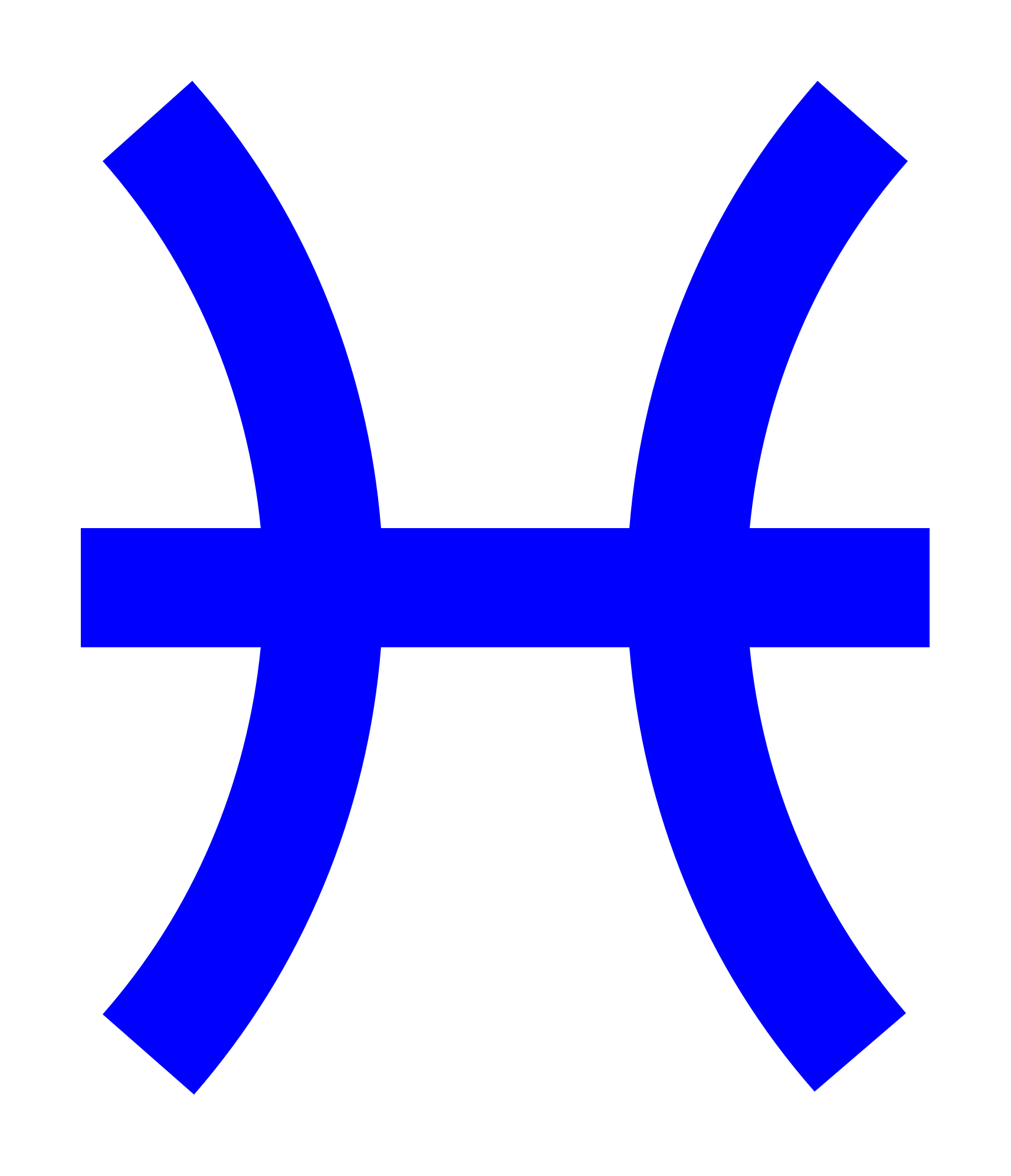 Neptune in Pisces
 (domicile, generational) is in its most natural expression: universal compassion, deep spiritual sensitivity, boundaries of the self almost absent. In the personal chart it strongly heightens empathy and inner life.
Neptune is found in the sign of Pisces in its primary domicile, expressing at the greatest power and without filters its own qualities of unlimited compassion, psychic sensitivity, artistic inspiration and search for cosmic unity. In this position of the highest astrological dignity, the boundaries of the Ego dissolve altogether, allowing the individual to perceive directly the flow of the collective unconscious and the deep interconnection between all things. The person possesses a boundless imagination, an almost clairvoyant intuition and a pure talent for music, for poetry, for mysticism and for all the arts that express the ineffable.
In emotional and spiritual life, Neptune in Pisces drives towards an unconditional and disinterested love, able of total devotion towards those who suffer. The person lives the emotions with an oceanic depth, seeking spiritual fusion with the whole and with the divine. The almost total absence of defensive barriers, however, makes the individual an utter emotional sponge, extremely vulnerable to the negative energies of the surrounding environment. The danger of inner bewilderment is constant: the person can struggle immensely to anchor themselves to everyday material reality, seeking refuge in dream, in victimhood or in various forms of escape and dependence in order to flee the pain of the world.
The main risks of this position are the inability to say no, confusion of identity, the tendency to let oneself be manipulated or to fall into the complex of the disappointed saviour. The evolutionary lesson for whoever has Neptune in Pisces lies in building a strong personal container for their own infinite inner sensitivity. By learning to set healthy boundaries without closing the heart, the individual becomes a true channel of grace, universal love and spiritual healing, able to bring a divine light into the life of whoever they meet along the way.
Updated on 19/09/2026
Here you will find the meaning of each placement on its own. To see which ones apply to you, calculate your birth chart: the interpretations that concern you appear below the wheel.
Calculate your birth chartWe respect your privacy
This site uses technical cookies, needed for it to work, plus one cookie that remembers the language you chose: these need no consent. To count visits it also uses Google Analytics, and this we do ask you: the page you open is reported to Google anonymously, but its two cookies are created only if you accept. If you refuse, the site works exactly as before. There is no profiled advertising.


 Deutsch
 Español
 Français
 Italiano
 Português (Brasil)
 Português (Portugal)