 The Moon in the signs
The Moon describes emotional life: affective needs, instinctive reactions, what brings a sense of security and the way one seeks and offers protection. The Moon sign tells how a person feels, even before how they think, and often shows in habits and in the relationship with home and with caregivers. It is one of the most intimate placements in the chart: knowing it helps to understand what one needs in order to feel well.
Here you will find the meaning of each placement on its own. To see which ones apply to you, calculate your birth chart: the interpretations that concern you appear below the wheel.
Calculate your birth chart Moon in Aries
The Moon in Aries reacts on instinct, with quick, direct emotions that flare up and die down fast. The primary emotional need is to be able to act at once on what is felt, without mediation: waiting is uncomfortable.
Emotion arises as an impulse and immediately looks for a road towards a gesture, a word, a movement. A held-back feeling turns quickly into irritation, and the irritation, once discharged, leaves no grudge behind. It is an honest, barely mediated way of feeling, which says almost everything in the moment it happens.
Affective memory is short, and that is a good thing more often than it seems. Anger arrives fast and discharges fast, leaving no deposit; grudges do not last because they would require a patience these people do not have. In childhood they often learned that being seen meant stepping forward, and emotional courage formed early, sometimes before its time.
The way they give others security is practical and immediate: they intervene, they defend, they solve. Faced with a problem belonging to someone they care about, the reaction is not prolonged listening but action, and this can be exactly what is needed - or exactly what is not, depending on who is in front of them. Affection is shown by doing, rarely by explaining.
The body follows the same rhythm as the emotions: energy arriving in waves, short but deep sleep, sudden hunger, a real need to discharge tension through movement. After a difficult day these people do not rest by sitting still - rest comes after the run, the long walk, the physical work. Nervousness with no outlet quickly becomes a headache or impatience with whoever happens to be nearest.
In close bonds they ask for frankness and short timescales. A problem should be stated at once, even badly, because silence makes them more uncomfortable than a row does; in exchange they offer an immediate and uncalculated presence whenever someone needs them. Those who love them learn early that an outburst is not the end of anything, and that affection here is measured by what gets done in the first five minutes.
The difficulty arises from emotional impatience. A bond that asks for slow timing, silences, working-through, makes them uneasy; frustration is expressed immediately and can wound someone with thinner skin. There is also a tendency to confuse the intensity of the reaction with the depth of the feeling, and to read other people's calm as indifference.
Maturing comes through learning to wait. Discovering that an emotion can be felt in full without being instantly acted on, and that someone else's silence is not necessarily a refusal, gives this Moon what it lacks: not sincerity, which it already has, but the time in which sincerity can be received.
 Moon in Taurus
The Moon in Taurus seeks security through material stability, physical contact and settled habits. Emotions are slow to move but, once rooted, very resistant to change: comfort comes through the senses.
Serenity, here, is not an idea but a physical condition: a rhythm that does not change abruptly, a body one is kind to, a place with its own smells, people who stay. When it is there it shows and it spreads - this is one of the most calming positions in the zodiac for whoever is nearby.
The Moon is exalted in Taurus, and tradition points to a precise quality: the capacity to nourish and to be nourished without drama. The link with childhood is often made of simple and lasting things - flavours, repeated gestures, a recognisable home - and the inner security that comes from it holds up well even through the difficult phases of adult life.
Emotion is slow both to kindle and to go out. They do not fall in love quickly, but when it happens the feeling has deep roots; they do not get angry easily, but an anger that has reached breaking point is not settled with an apology. Affection is expressed through continuity: being there always, in the same way, is the main message.
The body asks for regularity: steady hours, real meals, long sleep, affectionate physical contact that is worth more than many words. Rest comes through slowness - cooking, the garden, music, a walk with no destination - and nature is a concrete remedy for this Moon, not a figure of speech. When life becomes too fast, the first signal comes from the body before it comes from the mood.
In close bonds they offer continuity and ask for predictability. They do not like surprises, not even pleasant ones, and a change announced in good time is received far better than a sudden one; in return they stay, across the years, with a constancy that does not need to be recalled. Those who love them discover that their way of saying the important things is nearly always a concrete and repeated gesture.
The shadow is attachment. The line between holding and holding on to is thin, and jealousy - when it appears - nearly always grows from the fear that something which had become part of oneself might be taken away. Change is experienced as a threat even when it would be a relief, and comfort may be sought in food or in habits until it becomes a burden.
Maturing comes through distinguishing security from possession. Understanding that a bond held tight does not thereby become safer, and that one thing can change without everything else being lost, releases this Moon's finest quality: a calm, constant affective presence on which others lean without having to ask.
 Moon in Gemini
The Moon in Gemini processes emotions by talking about them, rationalising them, finding words for every state of mind. The emotional need is for variety and constant mental stimulation, with the risk of intellectualising what is felt instead of living it.
Often what is felt becomes clear precisely while it is being said. That is why prolonged silence in a relationship creates more anxiety than a quarrel: what is not named stays undefined, and the undefined is the least bearable thing for this position.
Emotion is mobile and curious. Moods change quickly and leave no residue; interest in people is lively and kind; contact, even light contact, is nourishment. In childhood they often learned that closeness came through dialogue or through a shared game of the mind, and since then their way of being in affection has remained made of exchange: telling, asking, commenting.
Their strength is affective intelligence. These people know how to lighten a heavy moment, to find the sentence that unblocks it, to put into words what someone else cannot formulate. They are pleasant companions on ordinary days, because their nearness does not weigh and does not continually ask for reassurance.
The nervous system is the sensitive point: sleep is easily disturbed, thoughts pile up in the evening, and tension gathers in the shoulders and the breath. Rest does not come from stillness but from a change of scene - a conversation, a book, a different route - and an environment that is silent and always the same, instead of calming, increases the restlessness. Writing down what one feels works here better than many other things.
In close bonds they ask for mutual curiosity. A relationship in which nothing is told any more dies for them long before it does for others, even if everything else is working; in exchange they offer lightness, attentiveness and the ability not to turn every difficulty into a drama. Those who love them learn that their need for variety is not a signal of flight, but the way they stay interested.
The difficulty is the distance that words can create. Translating an emotion into speech at once can become an elegant way of not feeling it, and irony can serve to keep at bay what hurts. Inconstancy - enthusiasm that moves on - can make an affection look superficial when it is not, and whoever is beside them struggles to know when the bottom has been reached.
Maturing comes through staying inside a feeling without having to explain it. Discovering that one can be close to someone in silence, and that an emotion does not become truer for having been well formulated, gives this Moon a depth that takes nothing from its lightness - on the contrary, it makes it believable at last.
 Moon in Cancer
The Moon in Cancer is in its most natural condition: deep emotionality, a very vivid affective memory, a strong need for belonging and for a safe nest. Mood follows inner tides, and caring for others is also a way of caring for oneself.
The primary need is belonging - having a place and people to return to - and much of life is organised around it. The tides of mood do not depend on events and cannot be corrected by will: they have to be accepted the way the weather is accepted.
Affective memory is extremely long. Sentences, atmospheres, smells, tiny anniversaries are all remembered; the past is not an archive but a room one can re-enter at any moment, and what has been loved is never really left behind. The tie to one's origins and to the mother figure - by her presence or her absence - stays central for a whole life.
Their strength is the capacity to care. This Moon senses a need before it is spoken, protects with a tenacity that surprises, and builds around itself a place in which others feel received. Nourishing, in the widest sense of the word, is its way of loving, and it is also the way it looks after itself.
The body shows the effect of moods plainly: the stomach and digestion react to tension, sleep lengthens in difficult periods, appetite follows the mood. Real rest comes through the home - tidying, cooking, being among one's own things - and through water, which has an immediate calming effect for this Moon. A few hours of solitude after a crowded day are not a whim but a necessity.
In close bonds they ask to be understood without having to explain, which is at once their largest request and the hardest to satisfy. In exchange they offer an affective loyalty that does not wear out and a capacity to look after others that switches itself on in moments of need. Those who love them learn to read the small signals, because here the important things are nearly always said half under the breath, or not said at all.
The shadow is defensiveness. When they feel hurt they withdraw instead of saying so, and unspoken distress becomes resentment that surfaces much later, in indirect forms; touchiness grows from there. Brooding on the past can consume the present, and care can tip over into an affectionate control that leaves no room for whoever receives it.
Maturing comes through naming what hurts at the moment it happens, instead of storing it. Learning that the nest exists to be left and returned to, not to be stayed in, allows this position to place its enormous capacity for understanding at the service of others without its becoming, each time, a personal wound.
 Moon in Leo
The Moon in Leo has an emotional need to be appreciated and to matter to someone in a visible way: feelings are generous and theatrical, expressed with warmth. The risk is tying one's inner balance to the attention received.
It is not enough for the affection to exist: it has to be seen, said, given a recognisable shape. The primary need is to feel special to someone, and inner security leans heavily on the answer that comes back. It is a warm way of feeling, theatrical in the good sense, which lights up occasions and makes them memorable.
Generosity is spontaneous and abundant. This Moon gives time, attention, presents, impetus, and does so with evident pleasure; in the difficult moments of those it loves it knows how to be present in a physical and reassuring way. Childhood often left the mark of a need for recognition - met or unmet - that goes on working in adult relationships.
Their strength is loyalty. Whoever enters the circle of this position's affections is defended without calculation and without conditions, and the trust they receive is total. There is an affective dignity here that does not permit pettiness: even in conflict, they rarely go below a certain level.
The body needs sunlight, movement and beauty around it. These people go out in grey surroundings and recharge with surprising speed when something genuinely amuses them; rest comes through pleasure - a party, an occasion, clothes they like, an afternoon given to making something - far more than through silence. A long period with nothing beautiful in it leaves a shadow that shows on the face before it shows in words.
In close bonds they ask to be chosen every day, not once and for all. They need affection to be said and seen, and a correct but lifeless relationship makes them suffer more than a difficult one; in exchange they give warmth, impetus, faithfulness and a generosity that keeps no account. Those who love them discover that very few explicit attentions are enough to get a great deal more back.
The painful point is pride. When attention is missing the wound is deeper than they admit, and the reaction may be an offended withdrawal or an implicit demand for proofs of affection that nobody understood they were supposed to give. Generosity can expect in return an admiration it has no right to demand, and the disappointment then is bitter.
Maturing comes through discovering that affection is not measured in attentions. Accepting the sober forms in which many people love, and giving without keeping count, turns this Moon into the best it can be: a warmth that asks for nothing and that for that very reason really does warm.
 Moon in Virgo
The Moon in Virgo handles emotions through order, practical usefulness and attention to detail: feeling useful and in control is more reassuring than emotional surrender. There is a risk of very harsh emotional self-criticism.
External disorder translates almost immediately into inner unease, which is why organised time and cared-for surroundings are worth more here than any reassuring speech. It is a discreet way of feeling, expressed very little in words and a great deal in concrete gestures - so little in words that it often goes unrecognised as affection.
Affection takes the form of service. This Moon remembers the medicine, prepares lunch the way the other person likes it, sorts out the practical problem before it grows: it is its way of saying things it would never say directly. In childhood they often learned that being useful was the safe way of being in relationship, and the habit remains.
Their strength is constant attention. It is not a noisy presence, but it never fails; in difficult situations it is the one that takes care of the things nobody wants to do, and that keeps daily life standing while the others deal with the rest. The discretion with which it does so is part of the gift.
The body is where anxiety settles: digestion, light sleep, small complaints that appear when life becomes confused. Rest comes, paradoxically, through doing - tidying a drawer, cooking with care, finishing something left open - because for this Moon external order calms inner order. A healthy routine is worth more here than any remedy.
In close bonds they ask for little and give a great deal, and that is precisely the imbalance to correct. They make themselves useful, they solve, they prevent, and almost never say what they would need; in exchange they offer an attentive presence that never fails, not even through long grey periods. Those who love them have to learn to ask explicitly what they can do for them, because on their own they will not say.
The shadow is anxiety. Control serves to keep at bay an underlying worry that rarely has a precise object, and self-criticism is severe: the impression of not having done enough accompanies even the best results. The same attention, turned outward, can become continual criticism, and whoever receives it hears only the correction, not the care that prompted it.
Maturing comes through understanding that affection is not earned. Accepting something without immediately repaying it, allowing themselves a mistake without a trial, and letting something stay imperfect, lifts the weight this Moon carries and lets it be what it really is: one of the most thoughtful and dependable presences one can have nearby.
 Moon in Libra
The Moon in Libra finds emotional balance in the relationship with the other and in the harmony of the surrounding environment: solitude and conflict weigh heavily, and there is a tendency to mediate in order to restore peace, even at the cost of not saying what is really felt.
An unspoken tension in the air, a relationship out of balance, a room in which two people are not speaking: any of these is enough to take the serenity away. The primary need is to feel part of a pair - to share, to have someone to measure oneself against - and prolonged solitude weighs more than it does on anybody else.
Their way of being in affection is attentive and courteous. This Moon has a sense of the right gesture, remembers what matters to the other person, knows how to create surroundings in which one feels well treated. Beauty - of things, of manners, of words - is not an affectation but a condition of well-being, and unpleasant surroundings weigh on the mood as much as a sorrow does.
Their strength is the ability to tune. They can smooth things down, mediate, bring a conversation back to a level at which it is still possible to talk; in couples and in groups they are often the one who holds the parts together. Their listening is genuine, and their willingness to put themselves in the other's place is spontaneous, not strategic. In a group that has stopped speaking to itself, they are usually the first to notice, and the first to find a harmless sentence from which the conversation can start again.
The body registers the relational climate: a tension at home turns into tiredness, insomnia, backache, and recovered serenity shows at once in the face. Rest comes through agreeable company and through beauty - cared-for surroundings, music, dinner with someone one feels well with - while prolonged solitude, instead of restoring, weighs. Disorder around them also disturbs more than they admit.
In close bonds they ask for mutual attention and for courteous language. A sentence said brutally stays a long time even when its content was right; in exchange they offer real listening, delicacy and the ability to remember what counts for the other person. Those who love them learn that their obliging silence is not agreement, and that it is worth asking twice what they really think.
The shadow is avoidance. Rather than break the harmony they say yes, they postpone, they let things go; and what is not said accumulates in silence until it all comes out together, much later, when by then it looks disproportionate. The need for the other can become difficulty in being alone, and their own opinion can get lost inside that of whoever is beside them.
Maturing comes through discovering that a disagreement does not destroy a bond. Learning to say a clear no and to sustain it, and to notice their own desire with the same attention they give to other people's, gives this Moon a balance that is no longer a continual effort but a stable quality.
 Moon in Scorpio
The Moon in Scorpio lives emotions with total intensity and protects them behind strong reserve: trusting is a rare and significant act, and every bond touches deep chords, often tied to a need for control or a fear of abandonment.
The primary need is an affective truth with no false bottoms: knowing what the other really feels, and being able to count on a bond that holds even through things said badly. Lukewarm feelings do not exist: there is what touches them and there is what does not concern them, and almost nothing in between.
Tradition places the Moon in fall here, and it points to a real difficulty: feeling so much, and having no simple way to let go. Affective wounds stay engraved with precision, childhood often leaves the mark of secrets or of tensions perceived and never explained, and trust becomes something granted after proof rather than out of politeness.
Their strength is faithfulness. When this Moon chooses someone, it stays - through crises, illnesses, the periods when everyone else moves away. It has a rare capacity to stay beside pain without taking fright, to bear what cannot be mended, and to be reborn after losses that seemed final.
The body stores what is not said: tensions that remain, sleep full of intense dreams, energy all concentrated at one point. Rest does not come through distraction but through immersion - silence, water, an absorbing activity, a real conversation with one single person - and a crowd tires them more than hard work does. After a difficult period these people need to withdraw for a length of time that seems excessive to others, and is not.
In close bonds they ask for exclusivity and truth, and they notice a crack long before it becomes visible. In exchange they offer a presence that does not retreat from anything: illness, failure and bereavement do not make them run, and it is precisely there that they are at their best. Those who love them learn that their insistent questions are not control for its own sake, but the way they try not to be left again.
The shadow is suspicion. Reassurances are sought that are never enough, hidden meanings are read where there were none, resentment is held instead of being brought out. Jealousy and the need for control grow from the same fear - that the bond will turn out to be false - and they often produce exactly the distance they meant to avoid. Silence, in this position, is the heaviest weapon.
Maturing comes through trusting by degrees instead of all or nothing. Speaking the suspicion while it is still small, accepting that an affection can be imperfect without therefore being a lie, and letting something happen without governing it, turns this Moon into one of the deepest and most solid presences one can have nearby.
 Moon in Sagittarius
The Moon in Sagittarius has an emotional need for space, for wide horizons and for a larger meaning to belong to: closeness is fine until it becomes a cage. Optimism is an instinctive way of reacting to discomfort.
Well-being depends on the sense of having a horizon ahead: projects, possibilities, the freedom to change something if needed. An affective situation perceived as closed takes away the air even when it is a good one; an open prospect, by contrast, makes many difficulties bearable.
The mood is fundamentally confident. This Moon gets up again quickly, finds the good side, laughs at what weighed on it shortly before; its company lightens, and in someone else's black moments it can give back confidence without minimising. In childhood an air of openness was often breathed - travel, ideas, people passing through - that left a taste for the possible.
Their strength is enthusiasm that communicates itself. It is not an affection measured in daily details but in the things it opens: shared experiences, places seen together, conversations that change a way of looking. Generosity is wide and immediate, and sincerity is such that one always knows where one stands.
The body asks for air and movement: walking, travelling, being outdoors, changing the landscape. Rest does not come from sitting still but from moving without obligation, and a long period shut between the same four walls shows in the mood before it shows anywhere else. Excess is a risk here too - at table, in spending, in commitments taken on all at once - and it is usually the signal that room is running short.
In close bonds they ask for trust and the absence of control. A partner who demands an account of every movement gets exactly the reaction they feared; left free, on the other hand, these people always come back. In exchange they offer cheerfulness, shared projects and the ability to make what seemed closed look possible. Those who love them learn that their need for horizon is not a way out but the condition for staying willingly.
The shadow is flight. When a relationship asks them to remain inside a difficulty, the temptation is to move - a journey, a new project, another possibility - and to call it a need for freedom. Lightness can become distraction from the needs of whoever is beside them, and frankness can arrive without measure at moments when something else was required.
Maturing comes through discovering that intimacy is not a cage. Staying in a difficult conversation to the end, noticing the ordinary detail that matters to the other person, and understanding that depth can also be reached while standing still, gives this Moon what it lacks: not warmth, which it already has, but continuity.
 Moon in Capricorn
The Moon in Capricorn tends to contain emotions, showing control and reliability even when there is fragility inside: the emotional need for security is met through concrete results and responsibilities taken on, often from a young age.
One learns early to regulate reactions, not to ask, to manage: the primary need is not to be at the mercy of what is felt. The result is a composed person, dependable in critical moments, who rarely makes others uncomfortable with their emotions - and who nearly always feels more than they show.
Tradition places the Moon in detriment here, and this is exactly the point: feeling has to pass through a structure before it can express itself. In childhood there was often an early responsibility, a sober affectivity, or the sense that need was something one did not talk about; that reserve has remained as a second nature.
Their strength is solidity. This Moon does not crumble under the blow: it holds, it organises, it deals with what has to be done while others are overwhelmed. Affection is expressed in commitments kept, concrete help, presence over time - and it is a faithfulness that does not need to declare itself, because it can be seen in the facts, year after year.
The body registers fatigue without protesting, and that is the problem: one carries on as long as one can, and the bill arrives all at once. Tension in the back and the joints, stiffness, accumulated tiredness are the way the body says what was not said in words. Rest comes through order and silence, and these people have to learn to plan it as they plan everything else, because they will not grant it to themselves spontaneously.
In close bonds they ask for seriousness and duration, and they distrust easy displays. They do not say that they need anything, but they do, and the gesture that touches them most is that of someone who stays without being begged. In exchange they offer a loyalty that is not in question and a presence that crosses the years without giving way. Those who love them learn not to wait for the request, because that request will never come.
The shadow is solitude. By dint of not asking one gets used to not receiving, and what was reserve becomes distance; a sense of duty can replace the pleasure of being together, and the severe judgement turned on themselves often reaches those they love as well, in the form of expectations never stated. The tenderness is there, but it struggles to find the door.
Maturing comes through learning to ask. Discovering that showing a need takes nothing away from one's authority, and that someone may want to be there even when there is nothing to be solved, opens in this position a tenderness that often arrives in the second half of life - and that, when it arrives, is among the most genuine there is.
 Moon in Aquarius
The Moon in Aquarius experiences emotion with a certain detachment, filtered through reason and oriented towards the group rather than the single bond: the need is for emotional freedom and for being accepted for one's uniqueness, not for conformity.
As soon as a relationship presents itself as a duty or as a continual demand, something inside draws back: well-being depends on not feeling obliged. The affection is there and it is sincere, but it wants to be given and never required, and it comes out better in friendship than in the closer forms of attachment.
Their way of feeling is warm and distant at once. These people grow fond of whoever is different, they accept others as they are with rare largeness, they do not judge ways of living outside the ordinary; at the same time they observe their own emotions one step back, as though those belonged to somebody else, and this protects them and isolates them together.
Their strength is affection without possession. They do not control, they do not demand an account, they leave room: it is a freely chosen mutual arrangement, and for many people it is an unusually restful form of love. In moments of crisis they stay clear-headed when everyone around them is losing their head, and that clarity is a real help.
The body responds badly to constraint and well to change: rigid hours, closed surroundings and unvarying routine create a subtle agitation that discharges into the nervous system. Rest comes through freely chosen company, through new ideas, through doing something other than what was planned; boredom, for this Moon, is a real form of malaise. Sleep often follows a rhythm entirely its own, and fighting it is of little use.
In close bonds they ask for room and loyalty together, and they do not regard these as contradictory requests. They suffocate if someone wants them all to themselves, and they stay extremely close to whoever lets them breathe; in exchange they offer an affection that does not blackmail and an acceptance without conditions. Those who love them learn that the distance they sometimes take is not a withdrawal, but the way they put themselves back in a condition to return.
The shadow is detachment. When emotion comes too close, the reaction is to explain it, to generalise it, to turn it into a principle - and whoever is beside them finds themselves talking to an idea instead of a person. One can be available to everyone and hardly reachable for anyone, and the need not to depend can become the thing most depended on.
Maturing comes through accepting close-up nearness. Staying inside an emotional moment without commenting on it, letting someone need us right now and specifically us, discovering that chosen belonging takes nothing away from freedom: that is when this Moon becomes what it promises - an adult affection, light and faithful at the same time.
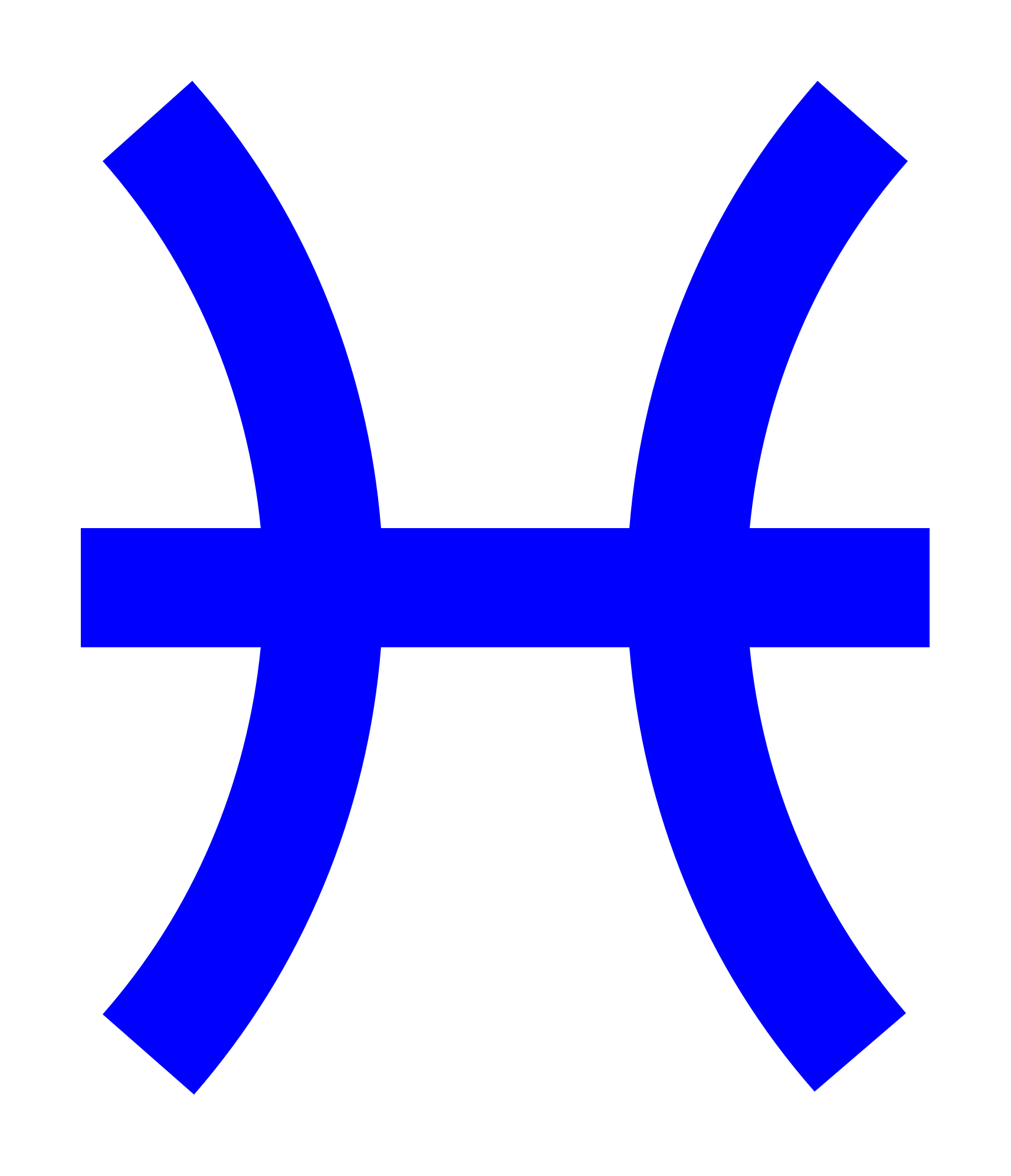 Moon in Pisces
The Moon in Pisces makes emotional boundaries very porous: the moods of others are absorbed easily, with great compassion but little defence. The deep need is for transcendence, an inner refuge, or escape from a world felt to be too harsh.
The moods of the surroundings come in as though they were one's own, and telling them apart takes work that nobody teaches. The primary need is a gentle fusion - feeling joined, not separate - and solitude frightens them less than indifference: what weighs is not the absence of people, it is the absence of contact.
Imagination is part of their affective life. This Moon loves what it senses or imagines about the other person too, and sometimes more than what it sees; it has a living relationship with dreams, atmospheres and music, and finds comfort in forms that do not pass through words. Childhood often left an exposed sensitivity, and an affection received in a tender but not always clear-cut way.
Their strength is compassion. It understands fragility without judging it, it forgives with an ease that disarms, it stays beside someone who is suffering with no need to solve them - and it is one of the few positions that can do this without wearing out. The gentleness is real and asks for nothing in return.
The body is as permeable as the mood: it feels the effect of crowded places, of noise, of tense people, and it restores itself with water, music, silence, long sleep. These people need more rest than average and should not regard that as a weakness; when the pauses are missing, tiredness becomes confusion and confusion becomes a malaise with no cause one can name.
In close bonds they ask for gentleness and understanding, and they give everything they have without measuring it. The risk is self-cancellation: devoting themselves to someone until they no longer know what they want, and calling it love. In exchange they offer a tenderness and a capacity for forgiveness that few positions have. Those who love them must remember to ask what they themselves desire, because left alone they tend to answer with the other person's wish.
The shadow is the confusion of boundaries. Tensions belonging to others are absorbed and mistaken for one's own; yes is said so as not to disappoint and then cannot be honoured; they attach themselves to situations that ask more than they can give, taking sacrifice for love. Faced with what hurts, the temptation is to dissolve - to postpone, to idealise, not to look.
Maturing comes through learning the boundary. Recognising which emotion is theirs and which is not, saying no without guilt, choosing where to pour this sensitivity instead of letting it spread everywhere: that is what allows this Moon to stay open without consuming itself, and to give others an understanding which, held within a shape, becomes precious.
Updated on 19/09/2026
Here you will find the meaning of each placement on its own. To see which ones apply to you, calculate your birth chart: the interpretations that concern you appear below the wheel.
Calculate your birth chartWe respect your privacy
This site uses technical cookies, needed for it to work, plus one cookie that remembers the language you chose: these need no consent. To count visits it also uses Google Analytics, and this we do ask you: the page you open is reported to Google anonymously, but its two cookies are created only if you accept. If you refuse, the site works exactly as before. There is no profiled advertising.


 Deutsch
 Español
 Français
 Italiano
 Português (Brasil)
 Português (Portugal)