

 Deutsch
 Español
 Français
 Italiano
 Português (Brasil)
 Português (Portugal)
What sort of book are you?
What sort of book are you?
Or, rather, which sign do you read?
Have we ever wondered which zodiac signs our favourite authors belong to?Is there a sort of ‘astrological compatibility’ that links an author to their reader?
Will a Cancer, when reading certain authors of the same sign, find their expectations met and their desire to enjoy a satisfying moment of relaxation in the tranquillity of reading fulfilled?
Can the writer’s zodiac sign align, through the extraordinary and sometimes astonishing interplay of astrological compatibility, with that of the captivated reader?
Between reader and writer, the same relationship of harmony and compatibility is recreated as exists between the signs. That trust (albeit idealised) which arises (and we astrologers observe it so often!) between a particular sign of the Zodiac and another, of a different nature, to which one feels irresistibly drawn.
Literary Synastry
An almost perfect harmony is usually found between authors and readers who share the same star sign (Taurus-Taurus, Aries-Aries, etc.): a similar view of reality, shared interests, and an identical way of feeling.
In this case, reading can become a sort of symbiosis between the reader and the theme of the text.
The situation is not dissimilar for readers and writers belonging to the same element, who find an immediate commonality of interests – even if these do not coincide perfectly – as they share the same fundamental nature.
For Fire (Aries/Leo/Sagittarius): action, adventure, passion; for Earth (Taurus/Virgo/Capricorn): a realistic tone, historical events set within a fictional context; Air (Gemini/Libra/Aquarius): humour, poetry, social commitment; Water (Cancer/Scorpio/Pisces): inner depth, emotion, imagination, escapism from reality and rules.
Similar to the previous case, but with a more balanced dynamic, are signs that form a beneficial sextile with one another (Aries–Gemini, Taurus–Cancer, Leo–Libra, Virgo–Scorpio, etc.): the reader finds it easy to understand and appreciate the writer’s style and content, sensing an astrological affinity based on a correspondence of essentially shared values.
In these three cases, however, it should be noted that the pleasure of reading unfolds with a certain ease and uniformity; what is at risk of being lost is the emotional tension arising from content and modes of expression that differ from the usual ones – which can sometimes prove remarkably unsettling for one’s mental processes, capable of opening the way to reflection, knowledge, and intellectual, moral and spiritual enrichment.
This is what occurs in the case of signs traditionally in conflict, where there is creative tension between them, in opposition and in square aspect; these tense relationships are often characterised by the classic ‘love-hate’ dynamic. An opposition between our birth sign and that of the writer (180° apart: Aries–Libra, Taurus–Scorpio, etc.) points to an alternative, contrary content, involving conflict and dialectical debate aimed at broadening our outlook and our usual mental horizons.
The same applies to signs in a square aspect (Aries–Cancer, Taurus–Aquarius, Virgo–Sagittarius, etc.).
It is therefore no coincidence that a Libra (to whom fate has assigned many Capricorn relatives!) inexplicably loves Umberto Eco, Edward Forster and Edgar Allan Poe – coincidentally all Capricorn writers – who form a dynamic (and at times dramatic) square aspect with their own sign.
Between reader and writer, we shall, to conclude, observe all the rules governing our Synastry – from the Greek ‘syn astròs’, meaning two birth charts viewed together, united in relation to one another.
We shall follow the traditional sequence of the 12 signs, discovering how writers have drawn inspiration from their natal signs in their most celebrated works. In the spirit of an ideal literary synastry, sign by sign, we shall then suggest a book by an author whose sign is opposite or square to the reader’s natal sign.
Aries
 Readers of this sign may initially take a keen interest in reading, but their approach is sporadic: they may become enthralled by a book, only to abandon it quickly when their interests take them elsewhere. Their exceptional physical energy allows them, when their enthusiasm endures, to prove themselves to be a voracious, tireless reader, capable of collecting well-known books in various translations, as well as completely unpublished works that they were the first to discover.
Great provocateurs and indomitable, passionate spirits of this sign include the poets Paul Verlaine, Charles Baudelaire and Émile Zola, as well as the writers Henry James, Sándor Márai, Mario Vargas Llosa and Dario Fo.
A book that might captivate an Aries, as it explores the themes of war and the lurking enemy—subjects dear to them—but here observed and demystified with the lucid disenchantment of the opposite sign, is *The Desert of the Tartars* by Libra Dino Buzzati. Another recommended book: *I’m Not Scared* by Libra Niccolò Ammaniti.
Taurus
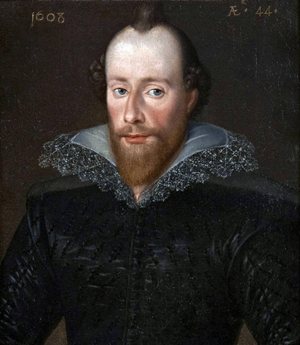 Patient, rigorous and methodical when immersed in a book, they savour it as if it were a tempting dish. Taurus has a ‘ruminative’ yet selective nature, which allows them to take a gradual interest, to slowly absorb the story, and to gently appreciate the styles in which it is crafted. Of the books they read, those that will remain firmly etched in their heart are the ones that have helped them to reflect more deeply and to move away from preconceptions.
An emblematic representative of the sign’s sensuality and hedonism: Honoré de Balzac. Charlotte Brontë and the Russians Vladimir Nabokov and Nikolai Bulgakov may represent the emotional and sensual side of the sign. Not forgetting the great William Shakespeare, who was a Taurus.
Given the well-known Taurus-Scorpio chemistry, we recommend the dramatic depth of the Scorpio Margaret Mazzantini’s novel *Don’t Move*. Better still is the gripping family saga of *The Brothers Karamazov* by the Scorpio Fyodor Dostoevsky.
Gemini
 In the realm of eternal spring, Mercury, the winged messenger, embodies writing and reading – the daily bread of every self-respecting Gemini. Mercurial traits include speed and conciseness in reading a wide range of texts, perhaps skimming over incidental passages. In this sign, we find a liveliness in discussing matters with determination and expertise, offering insights and critical observations in intellectual debate – often with the sole aim of imposing one’s own ironic and contrarian viewpoint. There is a tendency to favour non-fiction, satire and journalism. Pluto, exalted in this sign, not only fosters a theatrical streak but also encourages a preference for crime fiction, thrillers and, at times, simply the mystery genre.
Among the immortals, we find in this sign Dante Alighieri and his *Divine Comedy* (Gemini, the sign of the theatre), brilliantly set in the afterlife. Continuing with the classics: Thomas Mann, Marguerite Yourcenar, Anne Frank. Mercury’s swift influence also produces a wealth of poets: William Yeats, Federico García Lorca, Walt Whitman. Finally, crime and spy novels: Conan Doyle and Ken Follett.
The famous *On the Road* by Pisces author Jack Kerouac may prove ideal for the very ‘Beat’ spirit of this sign. For lovers of thrills, with touches of humour, *Murder on the Orient Express* by Virgo author Agatha Christie.
Cancer
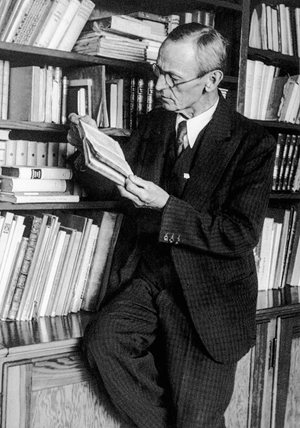 The Moon, as a story, a fairy tale or a fable, is the magical godmother of this sign – the most romantic of all, thanks in part to the exaltation of Venus (the planet astrologically associated with the novel). What better company than a good book to guide one into one’s own lunar inner world, to convey, in the privacy of one’s dreams, the anxieties and everyday melancholy?
Cancer, despite its proverbial laziness, is a voracious consumer of books. Books started and left to gather dust, books devoured in the brief span of a single night.
Giacomo Leopardi, the most emblematic poet: he dedicates an immortal masterpiece to his Moon. They are joined by: Marcel Proust, Franz Kafka, Ernest Hemingway, Hermann Hesse, Nathaniel Hawthorne, Pablo Neruda, Luigi Pirandello, Jean Cocteau, William Thackeray and Antoine de Saint-Exupéry. Among their contemporaries, we might mention Stanley Gardner, Patricia Cornwell and Oriana Fallaci.
Cancer may appreciate the depth of feeling expressed with the genuine fortitude typical of Capricorn in the works of two authors born under that sign: Edward Forster in *Maurice*, or Nicholas Sparks in *The Notebook*.
Leo
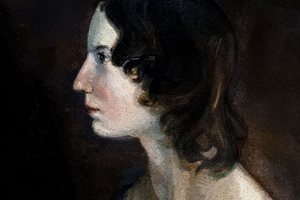 They are avid and experienced readers, cultured and refined, sensitive to the subtleties of literary expression – provided their excessive desire to devour everything possible, to expand their reading repertoire almost voraciously, does not take precedence. Their attention is drawn to a select few writers, almost always highly prestigious, or, conversely, to new, unknown but avant-garde authors who are already ‘rising stars’. It is in his library that we find all the classics of world literature; favourite themes: epic poetry, family sagas, and great epics.
This sunny Fire sign features female writers who have depicted the centrality of women and the blaze of extreme, tempestuous passions, such as Emily Brontë and Sibilla Aleramo, right up to the contemporary authors Elsa Morante and Isabel Allende. Among the men are Hermann Melville, Vitaliano Brancati and Guido Piovene.
I recommend two authors born under Aquarius who are capable of whisking our Leo away from the rigidity of his views and transporting him into the airy lightness of their works: *Alice’s Adventures in Wonderland* by Lewis Carroll, and *Novecento* by Baricco.
Virgo
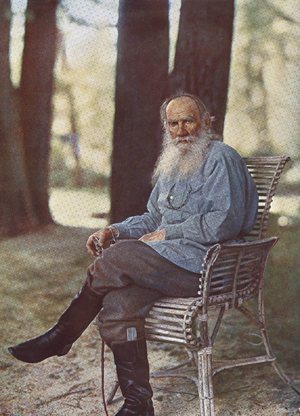 Attentive, refined and courteous, this sign proves to be a great lover of reading, which enables them to escape from the ‘here and now’ in which they are immersed due to the exaltation of Uranus (the present moment). For them, reading therefore almost always has a therapeutic value, offering a positive escape from everyday worries, although the chosen topics must be of practical use (current affairs on which they are well-informed) and relate to a practical reality – something that is always very pressing for Virgos, even amidst the pleasures of intellectual pursuits. He possesses a great ability to delve into the most diverse genres (although his preference lies mainly with non-fiction), and to navigate them with a broad perspective that is nonetheless capable of focusing on the details. However, he is also drawn to fiction, particularly of a historiographical nature.
Among the classics, we might mention figures of the calibre of Ludovico Ariosto, Goethe, Giovanni Verga and Lev Tolstoy; amongst women, Mary Shelley. From the large ranks of contemporary writers: Andrea Camilleri and Stephen King.
A reading recommendation for the most dedicated Virgos is the famous *Les Misérables* by Pisces Victor Hugo. For a more recent book, try *Testimone inconsapevole* by Gianrico Carofiglio.
Libra
 Under the sign of Venus (here representing the literary genre of poetry), many great poets, both past and present, come together: Virgil, Arthur Rimbaud, Eugenio Montale, Mario Luzi. But Libras also take great pleasure in reading novels and essays, being keen to evaluate works critically and rationally, as the planet Saturn – here in exaltation – rightly demands of them. Saturn is also the reason behind Libra’s sure-handed ability to select and limit their reading to a few, but good, works; works that are sometimes rather exclusive and which offer food for thought and reflection. Being undoubtedly a social sign, Libra often needs to discuss and exchange views with others on what they have read.
A great many authors were born under this sign: from the great Miguel de Cervantes, in whose work the bitter utopia of a just society is evident, to Pierre Ambroise de Laclos; from Oscar Wilde to Grazia Deledda; from Francis Scott Fitzgerald to William Faulkner.
‘The Unbearable Lightness of Being’ by Aries-born Milan Kundera resonates with the sentimental side of the sign, whilst its mystical and idealistic side may be stimulated by reading ‘Siddhartha’ by Cancer-born Hermann Hesse.
Scorpio
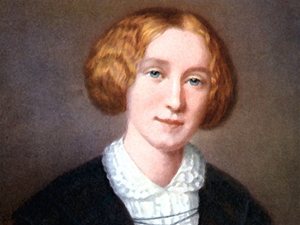 The books favoured by this sign, symbolically ruled by Pluto, are never run-of-the-mill, but rather varied, tormented and intricate: crime novels, without a doubt, or even novels with a murky backdrop; noir, certainly, perhaps with plot twists touching on politics or the Mafia. There is certainly no shortage of attraction to the erotic genre, which is always very much alive in this sign, so strongly characterised by an interest in passions and desire.
Writers representative of Scorpio, due to their taste for the mysterious, the hidden, and for unmasking appearances, include Mary Evans, Louis Stevenson and José Saramago. Among contemporary authors, thriller enthusiasts such as Carlo Lucarelli, Joe Lansdale and Sam Shepard stand out. Finally, we find the poetry of Sylvia Plath within this sign.
The beautiful *Orlando* by Aquarius-born Virginia Woolf can strike a chord with the Scorpio soul, which is delighted by the metamorphosis undergone by the story’s protagonist. Alternatively, another more recent novel that may appeal to this sign is the brilliant *Cocaina* by Pitigrilli the Bull (pseudonym of Dino Segre).
Sagittarius
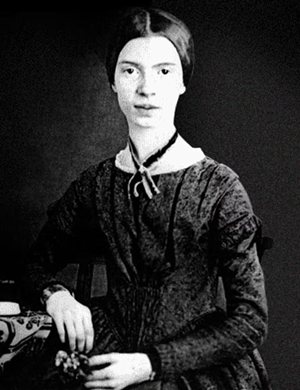 The constant theme of travel and adventure, evident in so many authors born under this sign (Jonathan Swift, Joseph Conrad), is also reflected on an individual level from the reader’s perspective – a true explorer of the Universe that is the book. A knack for reading texts quickly, an ability to move effortlessly from one genre to another whilst exploring a variety of themes. Jupiter (in its own sign, the planet of speech) instils in many the pleasure of skilfully communicating their reading experiences, often with a great capacity to persuade others. In writers born under this sign, it is always thanks to Jupiter that they possess the gift of storytelling, expressing themselves with great richness and producing a prolific body of work.
Among the large group of authors we find Emily Dickinson and Jane Austen, Horace, Gustave Flaubert, Mark Twain, Alberto Moravia and Rex Stout.
A read that satisfies the Sagittarian’s love of the exotic: all the works of Pisces-born García Márquez, and in particular *Of Love and Other Demons*. For a different take from a more recent author: *Saturday* by Gemini-born Ian McEwan.
Capricorn
 Here is the sign of the bibliophile: a passionate lover of reading, a buyer of books that he does not always read, but which he collects almost with devotion, filling his home to the brim. Saturn, the planet symbolically ruling this sign, inspires a calm mental order and a logical approach to reading (this is a sign that can easily tackle even the longest books and the most complex and intricate plots). If a book has won their favour, it is unlikely to be forgotten; indeed, with great skill and insight, our reader will always be able to revisit it, reflect on it and glean new food for thought, even years later.
Vittorio Alfieri, Giovanni Pascoli, Marcus Tullius Cicero, Molière, Jean Racine and Jack London are all authors born under Capricorn. Among their contemporaries are Patricia Highsmith and Terry Brooks.
My reading recommendation is a classic work on the human sense of loneliness, written by an author born under the opposite sign of Cancer: *The Old Man and the Sea* by Hemingway. The Saturnian side of this sign will greatly appreciate *The Honour of the Trial* by Aries-born Scott Turow.
Aquarius
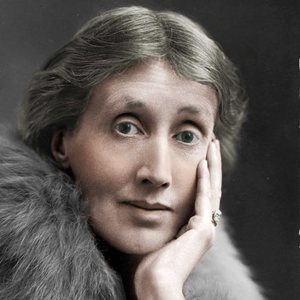 They are able to finish very long books in a short space of time, to quickly identify their content in a bookshop, and are capable of rereading them to draw insights and discover new perspectives that had initially escaped them. The fact is that varied and constantly changing reading habits suit this elusive and protean sign, making it difficult to assign it to a specific genre. In reality, thanks to their immense adaptability, they can explore vast horizons, always managing to draw on these experiences to enrich their intellectual and cultural heritage. Finally, it is essential for this sign—so deeply immersed in human relationships—to be able to receive and offer comments and opinions within a group, to the friends who surround them, to whom they will undoubtedly be keen to share their books.
Many writers have channelled Aquarian inventiveness and imagination into their works; among them are Jules Verne, Lord Byron, Charles Dickens, Lewis Carroll, Stendhal, James Joyce and George Simenon; whilst among the poets are Jacques Prévert and Giuseppe Ungaretti.
A classic such as ‘Moby Dick’ by the Leo Hermann Melville captivates Aquarians due to the anti-heroic themes it contains. For the sign’s intellectual and philosophical side, the perfect read might be *A Lover’s Discourse: Fragments* by the Scorpio Roland Barthes.
Pisces
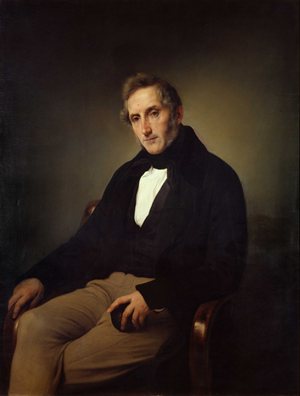 It is impossible not to find them, at least once, absorbed and focused on their reading, in a state of exclusive and untouchable connection – a state that is off-limits to anyone around them at that moment. Then they wake up, as if from a pleasant dream, easily reconnecting with reality. For Pisces, a book becomes an opportunity to immerse themselves in that sensitive realm so dear to the sign, and there is no need to distinguish between genres, as a typical reader will ensure they slip into the sea of their intense and poignant emotions through poetry, novels, crime stories, political and philosophical topics – provided they strike a chord with their soul.
In the realm of Neptune (symbolically ruling the sign), where brilliant imagination and artistic inspiration reign, many writers emerge with vigour and prolific output: from the classics Torquato Tasso and Henrik Ibsen, Gabriele D’Annunzio and Alessandro Manzoni, to modern figures such as Umberto Saba, Pierpaolo Pasolini and Crista Wolf. Among contemporary writers is the thriller author James Ellroy.
Recommended reading for the classics: *2001: A Space Odyssey* by Sagittarius Arthur C. Clarke; for a more recent book, *Separate Rooms* by Virgo Pier Vittorio Tondelli; and for fans of the fantasy genre, *The Mists of Avalon* by Gemini Marion Zimmer Bradley.